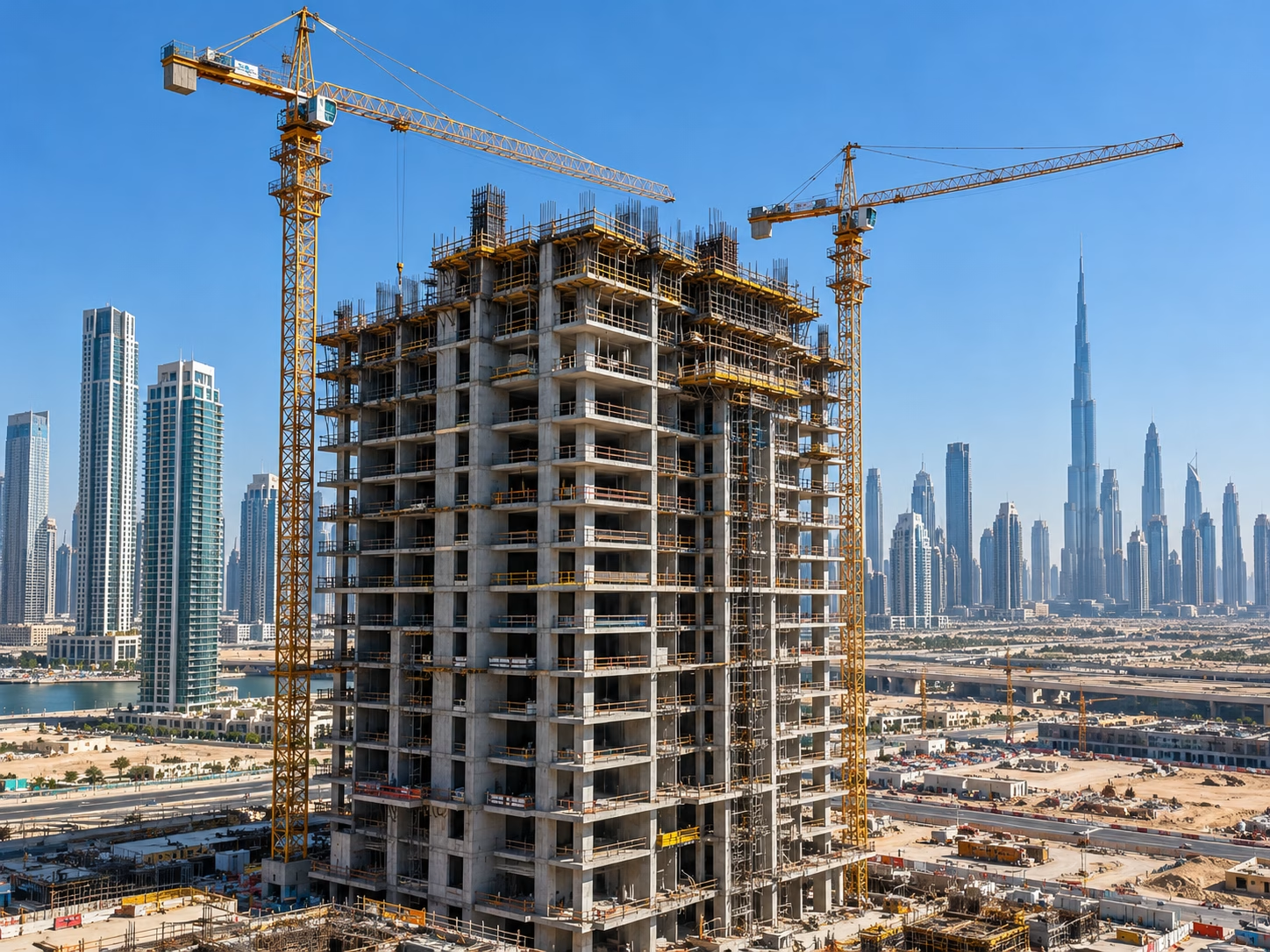
Understand the costs. Test the assumptions. Compare the potential.
Explore property investment ROI with a clear view of project costs, income assumptions, timelines and risk. Compare Dubai property investment routes before deciding.
Dubai property investment outcomes depend on a combination of costs, income, timing and market conditions. A structured analysis helps you compare projects on a like-for-like basis.
Purchase costs
Include acquisition fees and initial expenses.
Ongoing expenses
Review service charges, maintenance and financing.
Net income
Assess rent after costs and vacancy.
Exit value
Test sale proceeds and disposal costs.
Investment period
Compare outcomes over a consistent time horizon.
COMPARE DUBAI
PROJECT INVESTMENT ROUTES
Different Dubai property investment routes offer different risk profiles, costs and potential outcomes. Explore the options and what to consider for each.
Ready property
Review condition, rental assumptions and ownership costs.
Off-plan homes
Assess delivery timelines and payment commitments.
Pooled investment
Understand structure, fees and investor rights.
Development partnerships
Check funding needs and contractual responsibilities.
Villas & townhouses
Compare location, running costs and exit demand.
LOOK BEYOND THE HEADLINE RETURN
A complete project investment ROI review goes further than a single number. Consider the key factors below before comparing opportunities.
Ownership
Freehold or leasehold and associated rights and costs.
Project status
Completed or off-plan, and key delivery milestones.
All-in costs
Include purchase price, fees, fit-out and financing.
Vacancy assumptions
Consider likely occupancy and rental stability.
Funding needs
Assess equity requirements and financing terms.
Exit restrictions
Review any holding periods, fees or transfer limitations.
A PRACTICAL
PROJECT INVESTMENT ROI REVIEW
Follow a clear process to analyse costs, test assumptions and compare Dubai property investment opportunities.
1
Define the project
Clarify the property type, location and investment route.
2
Map all costs
Include purchase price, fees, fit-out, financing and ongoing expenses.
3
Estimate net proceeds
Project rental income after costs and vacancy assumptions.
4
Test scenarios
Explore different assumptions and market conditions.
5
Review risks
Consider market, regulatory and project-specific risks.
6
Compare consistently
Use the same approach across projects for a clearer view.