
Is Dubai Real Estate Stable for Investors: 2026 Market Trends
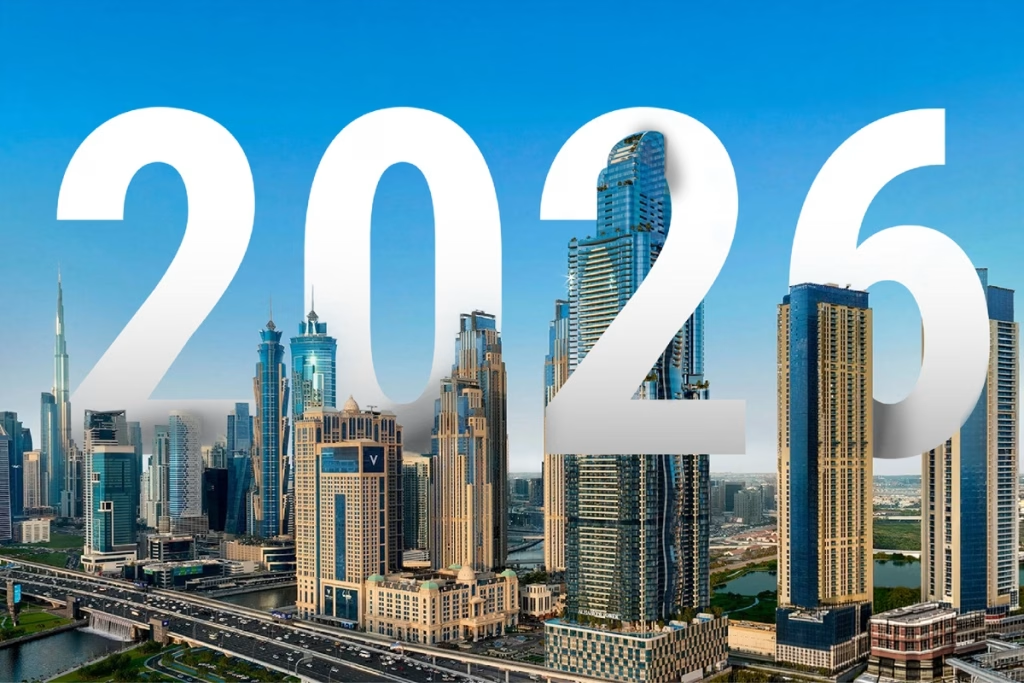
Is Dubai Real Estate Stable for Investors this is the single most important question any serious buyer asks before committing capital to any market. The short answer is yes and the data behind that answer is compelling, consistent, and verifiable across every key market indicator. Dubai recorded 180,987 property transactions worth AED 761 billion in 2024 both all-time records in a global environment where most major property markets were experiencing slowdowns, price corrections, and rising vacancy rates.
The evidence that Is Dubai Real Estate Stable for Investors is a clear yes becomes even stronger when you examine the structural foundations population growth, infrastructure investment, legal protections, and zero tax on all returns. This guide presents the complete 2026 picture covering every stability driver, risk factor, and market trend so you can invest with full confidence backed by real data.
Is Dubai Real Estate Stable for Investors: The Core Stability Drivers
Is Dubai Real Estate Stable for Investors because of four structural pillars that no other major global property market currently combines simultaneously. First population-driven demand: Dubai’s population is growing at 4.2% annually, heading from 3.65 million today to 5.8 million by 2040, creating sustained housing demand that absorbs new supply consistently. Second USD-pegged currency: the UAE dirham is pegged to the US dollar, eliminating currency risk for international investors your returns are stable in one of the world’s most trusted reserve currencies regardless of global FX movements.
Third zero tax environment: the UAE charges zero income tax, zero capital gains tax, and zero inheritance tax making Dubai property investment security uniquely powerful because every return earned stays in full with the investor. Fourth government stability: Dubai operates under a stable, long-term governance framework with a clear 30-year urban development vision the Dubai real estate market regulations 2026 framework is transparent, enforced, and consistently investor-friendly. These four pillars together answer Is Dubai Real Estate Stable for Investors with a resounding yes and they have been in place and strengthening for over two decades.
Pool Investment Offer in Dubai: Earn Up to 80% ROI
Offering investors the opportunity to partner with a qualified developer through a pooled investment starting from $0.5M (AED 1.7M).
Pool Investment Offer in Dubai: Earn Up to 80% ROI
Offering investors the opportunity to partner with a qualified developer through a pooled investment starting from $0.5M (AED 1.7M).
Is Dubai Real Estate Stable for Investors: Transaction Volume Data
Is Dubai Real Estate Stable for Investors the transaction volume data provides the most direct answer available. Dubai recorded 180,987 property transactions in 2024 a 36% year-on-year increase with total value exceeding AED 761 billion. The Dubai real estate market size 2026 continues expanding these numbers represent the fifth consecutive year of transaction volume growth, demonstrating that market momentum is sustained and building rather than peaking and retreating.
The Dubai property market liquidity 2026 data is especially reassuring 180,000+ annual transactions mean investors can enter and exit positions efficiently without significant price impact. In contrast, most major property markets that experienced corrections in 2023 and 2024 including London, Sydney, and Singapore saw transaction volumes fall 20% to 35% during the same period. This divergence confirms Is Dubai Real Estate Stable for Investors in a way that pure price data alone cannot sustained high transaction volumes mean genuine buyer demand, not speculative inflation.


Investors Price Stability Analysis
Is Dubai Real Estate Stable for Investors when examining price trends Dubai’s appreciation has been consistent rather than volatile, averaging 15% to 22% annually rather than spiking and crashing. Average apartment prices grew 19.4% in 2024 while villa prices grew 22.6% healthy appreciation rates that reflect genuine demand rather than speculative bubbles. The Dubai real estate bubble risk 2026 assessment from leading analysts including JLL, CBRE, and Knight Frank consistently rates Dubai as low bubble risk primarily because price growth is supported by real end-user demand and population growth rather than speculative leverage.
The Dubai property prices stability is further confirmed by the supply-demand balance data Dubai delivers approximately 35,000 to 40,000 new units annually against demand of 55,000 to 65,000 units. This structural undersupply means prices are supported by real scarcity not artificial restriction making Is Dubai Real Estate Stable for Investors especially clear when comparing Dubai to oversupplied markets where new construction is outpacing demand. The Dubai property market growth rate of 15% to 22% annually, sustained over five consecutive years, is the most reliable indicator that this appreciation is structural rather than cyclical.
Rental Market Strength
Is Dubai Real Estate Stable for Investors through the rental market lens reveals one of the most consistently strong income-generating environments available to property investors globally. Average gross rental yields across Dubai stood at 7.1% in 2024 compared to 3.2% in London, 2.8% in Sydney, and 2.4% in New York. The Dubai rental market 2026 data shows rental rates grew 10% to 15% city-wide in 2024 meaning investors who already own Dubai property saw their income rise significantly without any additional action or capital commitment.
The Dubai housing demand 2026 figures confirm rental demand will continue growing 90% of UAE residents rent their homes, creating an enormous, consistent tenant base that keeps vacancy rates near zero across most zones. The Dubai housing supply demand 2026 analysis projects this undersupply continuing through at least 2028, supporting further rental rate growth across all zones. For income-focused investors asking Is Dubai Real Estate Stable for Investors, the rental market data alone provides a compelling affirmative answer consistent high yields, growing rental rates, and near-zero vacancy combine into one of the world’s most reliable landlord environments.
Legal and Regulatory Framework
Is Dubai Real Estate Stable for Investors the RERA and Dubai Land Department legal framework provides one of the world’s most comprehensive investor protection systems. RERA mandates escrow account protections for all off-plan purchases developer payments are held in regulated accounts and only released as verified construction milestones are achieved. The Dubai real estate investment guide 2026 confirms that every transaction is recorded permanently in the Dubai Land Department digital registry making ownership transparent, tamper-proof, and legally enforceable from day one.
The Dubai real estate market recovery 2026 data from past market cycles including the 2008 to 2012 correction shows RERA regulatory reforms implemented after that period have permanently strengthened market foundations. Mandatory RERA project registration, escrow protections, developer delivery obligations, and buyer cancellation rights all work together to make Is Dubai Real Estate Stable for Investors a consistently positive answer for investors who conduct proper due diligence. Foreign investors in RERA-designated freehold zones hold 100% ownership rights identical to UAE nationals with no local sponsor requirement, no annual property tax, and no restriction on renting, selling, or transferring the asset.


Infrastructure Growth Impact
Is Dubai Real Estate Stable for Investors government infrastructure investment is one of the most powerful stability drivers in the entire market. The Al Maktoum International Airport expansion set to become the world’s largest airport with 260 million passenger capacity is adding enormous long-term value to Dubai South and surrounding zones. The Dubai real estate development 2026 pipeline shows AED 80 billion in confirmed infrastructure spending over the next 5 years covering Metro Blue Line expansion, new road networks, waterfront developments, and master-planned community completions.
The Dubai housing construction 2026 data shows 68,000 new residential units scheduled for delivery in 2026 against projected demand of 85,000 to 95,000 units, confirming undersupply persists despite record construction activity. Infrastructure spending of this scale directly creates new value in surrounding zones and Is Dubai Real Estate Stable for Investors benefiting from government-confirmed infrastructure backing is among the most secure investment theses available anywhere. The Dubai real estate market drivers 2026 airport expansion, metro extension, Expo City activation, and Dubai 2040 Urban Master Plan all point to sustained long-term appreciation across every zone they touch.
Risk Assessment 2026
Is Dubai Real Estate Stable for Investors honesty requires addressing the risks alongside the opportunities, because no market is entirely without risk. The primary Dubai property investment risks are: oversupply in specific micro-locations if development outpaces local demand, global economic shocks reducing investor appetite, and interest rate increases affecting mortgage-funded buyer capacity. However, the Dubai property market volatility data shows these risks are significantly mitigated compared to most global markets the city’s diversified economy, government financial reserves, and population growth provide strong downside buffers.
The Dubai real estate market risks of oversupply are zone-specific rather than city-wide investors who choose zones with confirmed demand drivers and infrastructure backing consistently avoid this risk entirely. The Dubai real estate investor confidence index from the Dubai Land Department reached an all-time high in Q4 2024 confirming that the investment community globally views Dubai’s risk-reward profile as the most attractive available.
Is Dubai Real Estate Stable for Investors: 2026 Market Outlook
Is Dubai Real Estate Stable for Investors in 2026 the forward-looking data confirms continued stability and growth across all key indicators. The Dubai real estate market forecast 2026 from JLL, CBRE, and Knight Frank projects 8% to 12% average price appreciation supported by continued population growth, infrastructure expansion, and sustained global investor demand. The Dubai property market outlook for rental income is equally positive rental rates are projected to grow a further 8% to 12% in 2026, building on the 10% to 15% growth recorded in 2024.
The Dubai real estate investment opportunities 2026 are strongest in emerging zones Dubai South, Creek Harbour, Arjan, and MBR City where prices are still 20% to 40% below their long-term potential value. The Dubai property investment fundamentals heading into 2026 are as strong as they have ever been record transactions, rising rents, infrastructure expansion, and zero tax all reinforcing each other.
Frequently Asked Questions
Q1. Has Dubai real estate ever crashed significantly?
Dubai Real Estate Stable for Investors did experience a correction from 2008 to 2012, where prices fell 50% in some areas during the global financial crisis.
Q2. Is there a real estate bubble risk in Dubai in 2026?
Dubai Real Estate Stable for Investors leading analysts including JLL, CBRE, and Knight Frank consistently rate Dubai as low bubble risk in 2026. Price growth is supported by genuine end-user demand and population growth not speculative leverage and the structural supply undersupply of 20,000 to 30,000 units annually provides a strong price floor.
Q3. What protections do foreign investors have in Dubai?
Dubai Real Estate Stable for Investors RERA escrow protections, Dubai Land Department digital registration, and 100% freehold ownership rights in designated zones. All Dubai real estate market regulations 2026 apply equally to foreign and domestic investors with identical legal rights, identical refund protections, and identical ownership security.
Q4. How does Dubai property stability compare to other global markets?
Is Dubai Real Estate Stable for Investors compared to alternatives Dubai delivered 19% to 22% price appreciation in 2024 while London fell 2%, Sydney fell 1%, and Singapore grew just 4
Q5. What is the minimum safe investment amount in Dubai property?
The Dubai property investment strategies 2026 for safe entry start from AED 300,000 in RERA-registered freehold zones with confirmed developer escrow protections
Final Verdict: Is Dubai Real Estate Stable for Investors in 2026?
Is Dubai Real Estate Stable for Investors the answer, backed by every data point in this guide, is an unambiguous yes. Record transaction volumes, consistent price appreciation, 7.1% average rental yields, structural supply undersupply, zero tax on all returns, government infrastructure backing, and one of the world’s strongest regulatory frameworks all combine into one market. The Dubai real estate market analysis 2026 confirms what experienced global investors already know Dubai is not just stable, it is the most complete combination of safety and return available in global property investment today.
Whether you are an NRI protecting wealth, an expat building passive income, or a global investor diversifying a portfolio Is Dubai Real Estate Stable for Investors is the right question, and 2026 is the right time to act on the answer. Define your budget, choose your zone, verify your developer, and invest with the complete confidence that every number in this guide fully supports your decision.
Top Property Developers in Dubai
Is Dubai Real Estate Stable for Investors: 2026 Market Trends
Is Dubai Real Estate Stable for Investors this is the single most important question any serious buyer asks before committing capital to any market. The short answer is yes and the data behind that answer is compelling, consistent, and verifiable across every key market indicator. Dubai recorded 180,987 property transactions worth AED 761 billion in 2024 both all-time records in a global environment where most major property markets were experiencing slowdowns, price corrections, and rising vacancy rates.
The evidence that Is Dubai Real Estate Stable for Investors is a clear yes becomes even stronger when you examine the structural foundations population growth, infrastructure investment, legal protections, and zero tax on all returns. This guide presents the complete 2026 picture covering every stability driver, risk factor, and market trend so you can invest with full confidence backed by real data.
Is Dubai Real Estate Stable for Investors: The Core Stability Drivers
Is Dubai Real Estate Stable for Investors because of four structural pillars that no other major global property market currently combines simultaneously. First population-driven demand: Dubai’s population is growing at 4.2% annually, heading from 3.65 million today to 5.8 million by 2040, creating sustained housing demand that absorbs new supply consistently. Second USD-pegged currency: the UAE dirham is pegged to the US dollar, eliminating currency risk for international investors your returns are stable in one of the world’s most trusted reserve currencies regardless of global FX movements.
Third zero tax environment: the UAE charges zero income tax, zero capital gains tax, and zero inheritance tax making Dubai property investment security uniquely powerful because every return earned stays in full with the investor. Fourth government stability: Dubai operates under a stable, long-term governance framework with a clear 30-year urban development vision the Dubai real estate market regulations 2026 framework is transparent, enforced, and consistently investor-friendly. These four pillars together answer Is Dubai Real Estate Stable for Investors with a resounding yes and they have been in place and strengthening for over two decades.
Pool Investment Offer in Dubai: Earn Up to 80% ROI
Offering investors the opportunity to partner with a qualified developer through a pooled investment starting from $0.5M (AED 1.7M).
Pool Investment Offer in Dubai: Earn Up to 80% ROI
Offering investors the opportunity to partner with a qualified developer through a pooled investment starting from $0.5M (AED 1.7M).
Is Dubai Real Estate Stable for Investors: Transaction Volume Data
Is Dubai Real Estate Stable for Investors the transaction volume data provides the most direct answer available. Dubai recorded 180,987 property transactions in 2024 a 36% year-on-year increase with total value exceeding AED 761 billion. The Dubai real estate market size 2026 continues expanding these numbers represent the fifth consecutive year of transaction volume growth, demonstrating that market momentum is sustained and building rather than peaking and retreating.
The Dubai property market liquidity 2026 data is especially reassuring 180,000+ annual transactions mean investors can enter and exit positions efficiently without significant price impact. In contrast, most major property markets that experienced corrections in 2023 and 2024 including London, Sydney, and Singapore saw transaction volumes fall 20% to 35% during the same period. This divergence confirms Is Dubai Real Estate Stable for Investors in a way that pure price data alone cannot sustained high transaction volumes mean genuine buyer demand, not speculative inflation.
Investors Price Stability Analysis
Is Dubai Real Estate Stable for Investors when examining price trends Dubai’s appreciation has been consistent rather than volatile, averaging 15% to 22% annually rather than spiking and crashing. Average apartment prices grew 19.4% in 2024 while villa prices grew 22.6% healthy appreciation rates that reflect genuine demand rather than speculative bubbles. The Dubai real estate bubble risk 2026 assessment from leading analysts including JLL, CBRE, and Knight Frank consistently rates Dubai as low bubble risk primarily because price growth is supported by real end-user demand and population growth rather than speculative leverage.
The Dubai property prices stability is further confirmed by the supply-demand balance data Dubai delivers approximately 35,000 to 40,000 new units annually against demand of 55,000 to 65,000 units. This structural undersupply means prices are supported by real scarcity not artificial restriction making Is Dubai Real Estate Stable for Investors especially clear when comparing Dubai to oversupplied markets where new construction is outpacing demand. The Dubai property market growth rate of 15% to 22% annually, sustained over five consecutive years, is the most reliable indicator that this appreciation is structural rather than cyclical.
Rental Market Strength
Is Dubai Real Estate Stable for Investors through the rental market lens reveals one of the most consistently strong income-generating environments available to property investors globally. Average gross rental yields across Dubai stood at 7.1% in 2024 compared to 3.2% in London, 2.8% in Sydney, and 2.4% in New York. The Dubai rental market 2026 data shows rental rates grew 10% to 15% city-wide in 2024 meaning investors who already own Dubai property saw their income rise significantly without any additional action or capital commitment.
The Dubai housing demand 2026 figures confirm rental demand will continue growing 90% of UAE residents rent their homes, creating an enormous, consistent tenant base that keeps vacancy rates near zero across most zones. The Dubai housing supply demand 2026 analysis projects this undersupply continuing through at least 2028, supporting further rental rate growth across all zones. For income-focused investors asking Is Dubai Real Estate Stable for Investors, the rental market data alone provides a compelling affirmative answer consistent high yields, growing rental rates, and near-zero vacancy combine into one of the world’s most reliable landlord environments.
Legal and Regulatory Framework
Is Dubai Real Estate Stable for Investors the RERA and Dubai Land Department legal framework provides one of the world’s most comprehensive investor protection systems. RERA mandates escrow account protections for all off-plan purchases developer payments are held in regulated accounts and only released as verified construction milestones are achieved. The Dubai real estate investment guide 2026 confirms that every transaction is recorded permanently in the Dubai Land Department digital registry making ownership transparent, tamper-proof, and legally enforceable from day one.
The Dubai real estate market recovery 2026 data from past market cycles including the 2008 to 2012 correction shows RERA regulatory reforms implemented after that period have permanently strengthened market foundations. Mandatory RERA project registration, escrow protections, developer delivery obligations, and buyer cancellation rights all work together to make Is Dubai Real Estate Stable for Investors a consistently positive answer for investors who conduct proper due diligence. Foreign investors in RERA-designated freehold zones hold 100% ownership rights identical to UAE nationals with no local sponsor requirement, no annual property tax, and no restriction on renting, selling, or transferring the asset.
Infrastructure Growth Impact
Is Dubai Real Estate Stable for Investors government infrastructure investment is one of the most powerful stability drivers in the entire market. The Al Maktoum International Airport expansion set to become the world’s largest airport with 260 million passenger capacity is adding enormous long-term value to Dubai South and surrounding zones. The Dubai real estate development 2026 pipeline shows AED 80 billion in confirmed infrastructure spending over the next 5 years covering Metro Blue Line expansion, new road networks, waterfront developments, and master-planned community completions.
The Dubai housing construction 2026 data shows 68,000 new residential units scheduled for delivery in 2026 against projected demand of 85,000 to 95,000 units, confirming undersupply persists despite record construction activity. Infrastructure spending of this scale directly creates new value in surrounding zones and Is Dubai Real Estate Stable for Investors benefiting from government-confirmed infrastructure backing is among the most secure investment theses available anywhere. The Dubai real estate market drivers 2026 airport expansion, metro extension, Expo City activation, and Dubai 2040 Urban Master Plan all point to sustained long-term appreciation across every zone they touch.
Risk Assessment 2026
Is Dubai Real Estate Stable for Investors honesty requires addressing the risks alongside the opportunities, because no market is entirely without risk. The primary Dubai property investment risks are: oversupply in specific micro-locations if development outpaces local demand, global economic shocks reducing investor appetite, and interest rate increases affecting mortgage-funded buyer capacity. However, the Dubai property market volatility data shows these risks are significantly mitigated compared to most global markets the city’s diversified economy, government financial reserves, and population growth provide strong downside buffers.
The Dubai real estate market risks of oversupply are zone-specific rather than city-wide investors who choose zones with confirmed demand drivers and infrastructure backing consistently avoid this risk entirely. The Dubai real estate investor confidence index from the Dubai Land Department reached an all-time high in Q4 2024 confirming that the investment community globally views Dubai’s risk-reward profile as the most attractive available.
Is Dubai Real Estate Stable for Investors: 2026 Market Outlook
Is Dubai Real Estate Stable for Investors in 2026 the forward-looking data confirms continued stability and growth across all key indicators. The Dubai real estate market forecast 2026 from JLL, CBRE, and Knight Frank projects 8% to 12% average price appreciation supported by continued population growth, infrastructure expansion, and sustained global investor demand. The Dubai property market outlook for rental income is equally positive rental rates are projected to grow a further 8% to 12% in 2026, building on the 10% to 15% growth recorded in 2024.
The Dubai real estate investment opportunities 2026 are strongest in emerging zones Dubai South, Creek Harbour, Arjan, and MBR City where prices are still 20% to 40% below their long-term potential value. The Dubai property investment fundamentals heading into 2026 are as strong as they have ever been record transactions, rising rents, infrastructure expansion, and zero tax all reinforcing each other.
Frequently Asked Questions
Q1. Has Dubai real estate ever crashed significantly?
Dubai Real Estate Stable for Investors did experience a correction from 2008 to 2012, where prices fell 50% in some areas during the global financial crisis.
Q2. Is there a real estate bubble risk in Dubai in 2026?
Dubai Real Estate Stable for Investors leading analysts including JLL, CBRE, and Knight Frank consistently rate Dubai as low bubble risk in 2026. Price growth is supported by genuine end-user demand and population growth not speculative leverage and the structural supply undersupply of 20,000 to 30,000 units annually provides a strong price floor.
Q3. What protections do foreign investors have in Dubai?
Dubai Real Estate Stable for Investors RERA escrow protections, Dubai Land Department digital registration, and 100% freehold ownership rights in designated zones. All Dubai real estate market regulations 2026 apply equally to foreign and domestic investors with identical legal rights, identical refund protections, and identical ownership security.
Q4. How does Dubai property stability compare to other global markets?
Is Dubai Real Estate Stable for Investors compared to alternatives Dubai delivered 19% to 22% price appreciation in 2024 while London fell 2%, Sydney fell 1%, and Singapore grew just 4
Q5. What is the minimum safe investment amount in Dubai property?
The Dubai property investment strategies 2026 for safe entry start from AED 300,000 in RERA-registered freehold zones with confirmed developer escrow protections
Final Verdict: Is Dubai Real Estate Stable for Investors in 2026?
Is Dubai Real Estate Stable for Investors the answer, backed by every data point in this guide, is an unambiguous yes. Record transaction volumes, consistent price appreciation, 7.1% average rental yields, structural supply undersupply, zero tax on all returns, government infrastructure backing, and one of the world’s strongest regulatory frameworks all combine into one market. The Dubai real estate market analysis 2026 confirms what experienced global investors already know Dubai is not just stable, it is the most complete combination of safety and return available in global property investment today.
Whether you are an NRI protecting wealth, an expat building passive income, or a global investor diversifying a portfolio Is Dubai Real Estate Stable for Investors is the right question, and 2026 is the right time to act on the answer. Define your budget, choose your zone, verify your developer, and invest with the complete confidence that every number in this guide fully supports your decision.
Top Property Developers in Dubai
Our platform provides off-plan and secondary property options, joint ventures, developer partnerships, and comprehensive property services.